


When we hear the word marketing, it feels really simple unless you actually do it. If your day starts with bringing in new leads, then sending follow-up emails, checking who opened them, and wondering why you didn't get much time to do the actual business – you already know the feeling. For a small team, keeping up with every marketing task manually can be really exhausting.
That's where marketing automation comes in. Choosing the right tool can take care of your repetitive tasks like emails, lead follow-ups, customer journeys, and campaign tracking, so you can focus on the work that actually needs your attention. But with so many platforms available, choosing one isn't always straightforward. In this guide, we look at some of the best marketing automation tools for small businesses, what each one does well, and which type of business they're best suited for.
What Is Marketing Automation?
Marketing automation is the use of software to handle repetitive marketing tasks based on customer actions, predefined triggers, and workflows. For small businesses, it can reduce manual work, keep communication consistent, and make it easier to manage leads and customers as the business grows. From sending a welcome email to following up with an interested lead, different types of marketing automation can support different parts of the customer journey.
Types of Marketing Automation
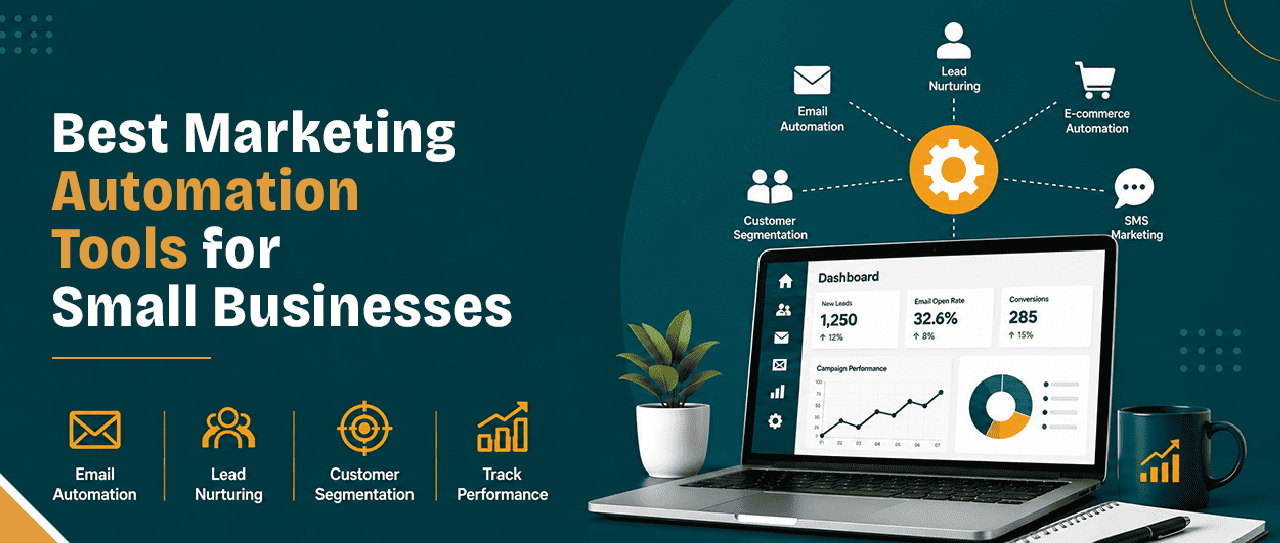
- Email Marketing Automation: Automates welcome emails, newsletters, promotional messages, and follow-ups based on customer actions or specific dates.
- Lead Nurturing: Keeps potential customers engaged by automatically sending useful content, reminders, or follow-ups based on where they are in the buying journey.
- Customer Segmentation: Groups customers based on factors such as interests, behaviour, purchase history, or engagement, making it easier to send more relevant messages.
- Lead Scoring: Assigns scores to leads based on actions such as opening an email, visiting a website, or submitting a form, helping businesses identify more interested prospects.
- Customer Journey Automation: Builds automated sequences that guide customers through different stages, from their first interaction with a brand to purchase and post-purchase communication.
- Social Media Automation: Allows businesses to schedule and publish content across social platforms, helping maintain a consistent posting schedule with less manual effort.
- SMS Marketing Automation: Sends automated reminders, offers, updates, and follow-ups based on customer activity or predefined triggers.
- E-commerce Automation: Helps online businesses automate abandoned-cart reminders, post-purchase messages, product recommendations, and customer re-engagement.
Why Should Small Businesses Use Marketing Automation?
Marketing for a small business typically involves handling many responsibilities with a small team and budget. From answering leads to sending emails to maintaining customer interest to analysing campaign results, these activities often consume much of a busy marketer's time. Marketing automation relieves some of the drudgery involved in repetitive tasks, allowing marketers to work on more productive activities, like strategy and customer service.
- Save Time: Automate emails, follow-ups, contact record updates, and campaign scheduling.
- Follow Up Consistently: Send regular reminders to potential customers without having to remember to do it, and maintain open communication with customers who have shown interest in your business.
- Keep Communication Personal: Use customer interests and behaviour to deliver more relevant content and offers.
- Scale More Easily: Handle a growing number of leads and customers without increasing manual workload at the same pace.
- Track What Works: Monitor engagement, leads, conversions, and campaign performance to understand what is delivering results.
Best Marketing Automation Tools for Small Businesses
Choosing the right marketing automation tool depends on what your business needs. A small e-commerce store might prioritise customer behaviour and abandoned-cart workflows, while a service business needs stronger lead nurturing and CRM features. Here are some of the most useful options that can fulfil your needs.
HubSpot – Best for All-in-One Marketing and CRM
HubSpot combines marketing automation with CRM, helping businesses manage leads, campaigns, customer data, and sales activity in one platform. It is a strong option for growing businesses that want their marketing and sales processes connected.
ActiveCampaign – Best for Advanced Automation
ActiveCampaign is suitable for businesses that need more detailed, behaviour-based workflows. It can help in automating lead nurturing, customer journeys, segmentation, and follow-ups based on how contacts interact with a business.
Mailchimp – Best for Email Marketing
Mailchimp is a practical choice for businesses that primarily need email marketing and straightforward automation. Its relatively simple interface makes it suitable for small teams that are getting started with automated campaigns.
Brevo – Best for Email and SMS Marketing
Brevo combines email and SMS marketing, making it useful for businesses that want to communicate with customers across multiple channels. It can be used for campaigns, automated follow-ups, and customer engagement.
| Tool | Best For | Key Strength | Ideal Business |
|---|---|---|---|
| HubSpot | All-in-one marketing | CRM + automation | Growing businesses |
| ActiveCampaign | Advanced workflows | Lead nurturing | Lead-focused businesses |
| Mailchimp | Email marketing | Simplicity | Beginners |
| Brevo | Email + SMS | Multi-channel communication | Small teams |
What Are the Benefits of Marketing Automation?
Marketing automation does not just save you a few hours a week. When used correctly, it helps small businesses reply to customers faster, present a consistent message, and manage their marketing more effectively. It also gives your team the time to come up with creative ideas, strategy, and the personal touches that only humans can provide.
- Less Manual Work: Time-consuming jobs including follow-up emails, updating customer information, scheduling campaigns, and classifying leads can all be automated, freeing up the team from mundane tasks.
- Faster Lead Response: Automated systems can reply instantly when a customer completes a form, downloads a guide, or shows interest in a solution – no delay for a person to reply.
- More Consistent Marketing: Predefined workflows help businesses maintain regular communication with leads and customers, even when the team is busy with other priorities.
- Better Customer Experiences: Customer behaviour and preferences can be used to deliver more relevant messages, recommendations, and follow-ups instead of sending the same communication to everyone.
- Easier Performance Tracking: Automation platforms can bring campaign data together, making it easier to track engagement, conversions, and customer activity and identify which marketing efforts are performing well.
Marketing Automation for Different Types of Small Businesses
Marketing automation can work across different types of small businesses, but the workflows you choose should match your customer journey, marketing goals, and day-to-day operations. From nurturing leads to bringing back existing customers, the right automation can help businesses stay consistent without adding more manual work.
- E-commerce Businesses: Abandoned cart reminders, product recommendations, post-purchase emails, and customer re-engagement.
- Service-Based Businesses: Lead follow-ups, appointment reminders, customer onboarding, and feedback requests.
- B2B Businesses: Lead nurturing, content follow-ups, lead scoring, and sales notifications.
- Local Businesses: Booking reminders, promotional messages, review requests, and customer re-engagement.
How to Choose the Right Marketing Automation Tool?
Choosing a marketing automation tool isn't just about picking the platform with the longest feature list. The right choice depends on your team's experience, the type of marketing you do, the tools you already use, and how much you expect your business to grow. Before committing to a platform, consider these factors:
- Ease of Use: Look for a platform with an interface your team can understand and manage without constant technical support. Easy workflow builders, templates, and simple navigation can make setup much smoother.
- Automation Features: Check whether the tool supports the workflows your business actually needs, such as lead nurturing, email sequences, customer follow-ups, segmentation, and abandoned-cart reminders.
- CRM and Integrations: Your automation tool should work well with your existing CRM, website, e-commerce platform, and other business tools. Strong integrations can prevent data from becoming scattered across different platforms.
- Pricing and Scalability: Consider both your current budget and future needs. A tool should offer a suitable starting plan while allowing you to add contacts, users, features, or channels as your business grows.
- Analytics and Reporting: Choose a platform that makes it easy to understand campaign performance. Look for useful data on opens, clicks, leads, conversions, and customer engagement.
- Available Marketing Channels: Consider where your customers actually interact with your business. Depending on your needs, you may want a platform that supports email, SMS, social media, website activity, or multiple channels from one place.
How Much Does Marketing Automation Software Cost?
Costs matter a lot to smaller companies because they often spend sparingly on advertising, so each software plan has to earn its keep. Pricing for marketing automation tools differs based on the platform used, the size of contact databases, how many people access accounts, what capabilities are required, and even which marketing channels are supported. While certain plans are free or start at basic rates ideal for new users, heavier use or broader reach may eventually lead to higher expenses with advanced packages.
As contacts or complexity climb, so do expenses across most solutions available. Pick a tool based on what you truly require, rather than selecting the lowest-priced one available. A solution that fits your current budget might appear affordable at first but could prove costly down the road if key functions are missing and moving to another system becomes necessary. Look for flexible pricing, useful features, and plans that can scale with your business.
Common Marketing Automation Mistakes Small Businesses Should Avoid
Marketing automation can save time and improve consistency, but setting up too many workflows without a clear strategy can create new problems. Small businesses should focus on automating tasks that genuinely add value while keeping customer experience at the centre.
- Automating Too Much Too Soon: Start with a few useful workflows instead of automating every marketing activity at once. Build gradually as you understand what works.
- Losing the Human Touch: Automation should support communication, not make every interaction feel robotic. Keep important conversations personalised and give customers opportunities to connect with a real person.
- Choosing a Tool Only Because It Is Cheap: Price matters, but it shouldn't be the only deciding factor. A cheaper platform may not offer the features, integrations, or scalability your business needs.
- Sending Too Many Automated Messages: More messages don't necessarily mean better engagement. Too many emails, SMS messages, or notifications can frustrate customers and lead to unsubscribes.
- Not Reviewing Campaign Performance: Automation isn't a set-it-and-forget-it process. Regularly review engagement, conversions, and other campaign data to identify what is working and improve workflows that aren't.
How to Get Started With Marketing Automation
Getting started with marketing automation doesn't mean you need to automate your entire marketing process from day one. Start with the tasks that take up the most time, choose a platform that fits your business, and build your workflows gradually. A simple, well-tested automation can be more useful than a complicated system that your team struggles to manage.
- Identify Repetitive Tasks: List routine tasks like emails, follow-ups, and reminders.
- Define Your Marketing Goals: Set clear goals for leads, sales, engagement, or time savings.
- Choose a Suitable Platform: Compare features, pricing, integrations, and ease of use.
- Build Your First Workflow: Start with one simple automation, such as a welcome email.
- Test and Improve: Track results and refine the workflow based on performance.
Turn Marketing Automation Into Your Growth Advantage
It often surprises small companies just how much automation can improve operations. Repetitive tasks fade into background processes while messaging stays steady across touchpoints. Focus shifts toward expansion when routine steps are handled behind the scenes. The right software matters most – not the one packed with the most features.
Lead guidance, timed emails, reminders for returning customers, and insights into what campaigns truly deliver – the correct platform supports clear momentum without getting in the way.
Whether your online marketing could use more direction or just tighter alignment, Flash Communications may be the missing piece. With the right marketing approach and automation working alongside it, small businesses can spend less time managing repetitive tasks and more time building meaningful connections with their customers.